
Your 17-year-old has been in their room for hours. The door is closed, their phone is in hand, and you can hear a short laugh followed by silence.
Are they happy? Are they lonely? Are they avoiding responsibilities—or simply taking a break?
For many parents, this uncertainty feels familiar. You may have grown up believing happiness looked obvious: good grades, respectful behaviour, a stable career plan, and regular family time. But Gen Z happiness signs often look different.
A young person can be doing well even if they value privacy, choose a non-traditional career, spend time online, or question family expectations. At the same time, they can look successful on paper while silently struggling.
The difference is important:
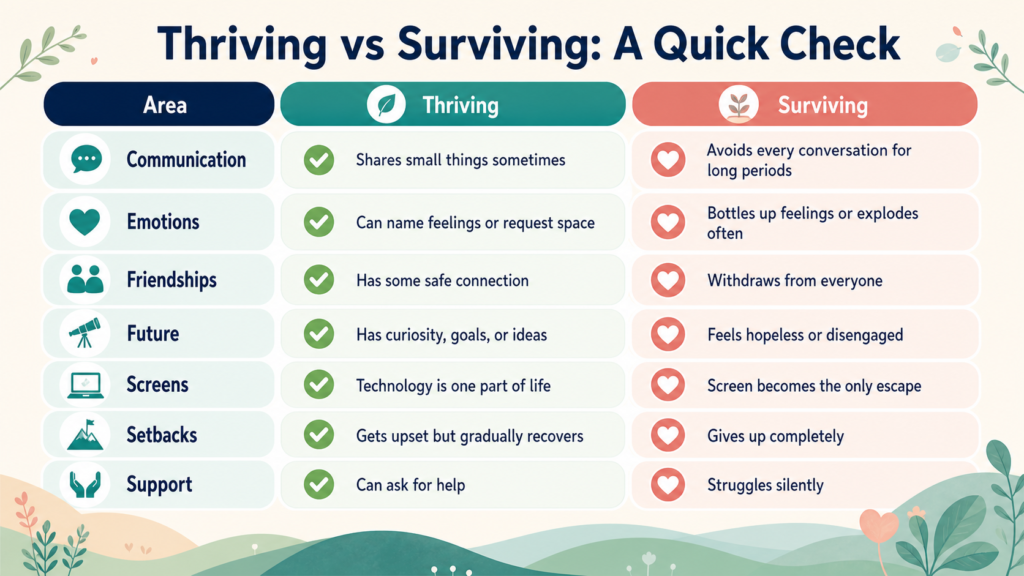
- Surviving means getting through each day and carrying stress quietly.
- Thriving means feeling connected, safe, hopeful, supported, and able to grow after setbacks.
This is not about perfect parenting. It is about connection. Here are seven signs your Gen Z child may be thriving—and practical ways to support them.
Quick reminder: A thriving teen or young adult will still have stress, bad moods, friendship problems, screen time, and a messy room. Thriving is not perfection. It is the ability to recover, connect, and keep moving forward.
Why Gen Z Happiness Looks Different
The Happiness Formula Has Changed
Many parents were raised with a simple idea: work hard, earn good grades, find stable employment, avoid trouble, and life will work out.
Education, financial stability, and family support still matter. But Gen Z is growing up in a very different world—one shaped by social media, climate anxiety, rising costs, online comparison, global uncertainty, and fast-changing careers influenced by AI.
As a result, many young people define happiness more broadly. They may care about:
- Emotional safety at home
- Supportive friendships
- Mental wellbeing
- Meaningful work or learning
- Freedom to make choices
- Financial independence
- A future that feels personally authentic
Gen Z’s openness about anxiety, stress, therapy, and emotional wellbeing is not automatically a weakness. It may show that they have language for feelings that earlier generations were often taught to hide. WHO estimates that one in seven adolescents aged 10–19 experiences a mental disorder worldwide, and many young people do not receive the help they need.
Gen Z does not need perfect parents. They need parents who are present, curious, and willing to listen.
1. They Start Small Conversations With You
Your child may not sit down and say, “Let me tell you about my feelings.” Most teens and young adults do not communicate that way.
Instead, they may say:
“You will not believe what happened today.”
“Can I show you something funny?”
“My group project is a complete mess.”
“Do you think this outfit works?”
Those small moments matter. They show that your child sees you as emotionally safe.
What thriving looks like
- They share a meme, song, video, or small update.
- They mention friends, work, classes, or hobbies.
- They ask for your view sometimes.
- They tell you minor problems before they become major ones.
- They expect interest rather than instant criticism.
A real-life moment
Maya, 19, walks in and says, “My project group is a disaster.”
Her parent wants to answer, “Then why did you choose those people?”
Instead, they say, “That sounds stressful. What happened?”
The problem is not solved immediately. But Maya keeps talking. That is the win.
When to look closer
One-word answers for a few days are normal. But complete silence for weeks, especially alongside major sleep, mood, eating, school, or work changes, deserves gentle attention.
Parent tip
Ask one open question, then pause: “What was the most interesting part of your day?” Do not turn curiosity into an interview.
2. They Can Disagree Without Being Afraid
A young person who says, “I see it differently,” or “I am not sure that career is for me,” may be showing healthy confidence—not disrespect.
Respectful disagreement is one of the clearest Gen Z happiness signs because it suggests your child believes they can be honest without losing love or safety.
What thriving looks like
- They express preferences without yelling.
- They explain why they disagree.
- They ask questions about rules and expectations.
- They can accept that not every answer will be yes.
- They return to difficult conversations after emotions settle.
A real-life moment
Alex, 21, says they want a year to build a design portfolio before applying for graduate school.
Their parent feels worried. Instead of saying, “Absolutely not,” they ask:
“Help me understand the plan. What would that year look like?”
Alex is still expected to be responsible. But they are also allowed to be heard.
When to look closer
Be mindful if your child agrees to everything because they are afraid of your reaction, hides major decisions, or turns every disagreement into explosive conflict or prolonged silence.
Parent tip
Try saying: “I do not fully agree, but I appreciate that you explained your view calmly.” That sentence builds trust without removing boundaries.
Parents can also read our guide, All Generations Explained: Birth Years, Characteristics & Mindset, to understand how Gen Z differs from other generations.
3. They Have a Life Beyond Their Screen
This is not an anti-phone message. Gen Z uses phones for friendships, learning, gaming, creativity, work, community, and relaxation.
The key question is not, “How many hours are they online?” It is:
“Do they also have connection, purpose, movement, and breaks beyond the screen?”
What thriving looks like
- They have friends online, offline, or both.
- They play sports, attend clubs, volunteer, work, or pursue hobbies.
- They can put devices away for sleep, meals, or important conversations.
- They have interests beyond likes and followers.
- They make plans outside the house sometimes.
A real-life moment
Jordan, 16, spends a lot of time gaming. Their parents worry they are isolated.
Then they notice Jordan plays sport every weekend, meets friends after school, helps edit videos for a sibling, and is learning coding.
The screen is part of their world. It is not their whole world.
When to look closer
Pay attention if they withdraw from both family and friends, stop all previous interests, never leave their room except for basic needs, or become extremely distressed when device access changes.
Parent tip
Support healthy social plans: “Have fun. What time should we expect you home?” Trust and clear safety expectations can exist together.
4. They Can Imagine a Future—Even an Unconventional One
A thriving child does not need a perfect five-year plan. But it is encouraging if they can picture something ahead.
That could be college, a trade, entrepreneurship, art, sport, healthcare, research, travel, a gap year, freelancing, or a career that does not yet have a clear job title.
What thriving looks like
- They talk about skills they want to learn.
- They research courses, work, projects, or opportunities.
- They save for a goal.
- They ask for help with applications, CVs, portfolios, or interviews.
- They can name something they want to try next.
A real-life moment
Sam, 22, says, “I want six months to learn digital marketing and build a portfolio.”
Instead of comparing Sam to peers, their parent asks:
“What is your timeline? What will you learn? How can we help you stay accountable?”
Fear becomes a plan.
When to look closer
“I do not care” can be normal after a hard day. But if it becomes the answer to everything for months—school, work, friends, hobbies, future plans—it may signal hopelessness or burnout.
Parent tip
Lead with curiosity: “What part of this excites you most?” “What is your backup plan?” “What support would help you take the next step?”
5. They Can Enjoy Missing Out
Not every young person wants to attend every event, trend, group chat, or late-night outing. That is not always social withdrawal.
JOMO—the joy of missing out—can be a healthy sign. It means your child can protect their energy and choose rest without feeling they are missing their entire life.
What thriving looks like
- They can decline plans without panic.
- They enjoy quiet hobbies, family time, music, exercise, or reading.
- They step away from online drama when needed.
- They do not depend on constant approval.
- They balance socializing and downtime.
A real-life moment
Taylor, 18, is invited out the night before an exam. They say, “I will skip it. I want to sleep and have breakfast with you tomorrow.”
They are not being antisocial. They are making a choice that fits their priorities.
When to look closer
There is a difference between choosing a quiet night and avoiding life. Be mindful if your child refuses all invitations because of anxiety, low mood, or fear, or if they compulsively chase every social event because they cannot tolerate being left out.
Parent tip
Avoid calling every quiet evening “lazy.”
Try: “It is okay to rest. I just want to make sure you are not carrying everything alone.”
6. They Ask for Help When Things Feel Heavy
A thriving Gen Z child is not someone who never struggles. It is someone who can say:
“I have been feeling anxious.”
“I am overwhelmed.”
“Can we talk?”
“I think I need help.”
Help-seeking is emotional intelligence. It means they trust support systems and believe problems can be addressed.
What thriving looks like
- They can name emotions, even imperfectly.
- They speak to a friend, parent, teacher, mentor, counsellor, or doctor.
- They ask for practical help.
- They use healthy coping tools such as art, music, exercise, journaling, faith, rest, or therapy.
- They accept that they do not have to solve everything alone.
A real-life moment
Avery, 20, says, “I panic before presentations.”
Their parent does not reply, “Just be confident.”
They say:
“Thank you for telling me. Do you want help finding someone to talk to?”
That response makes help feel safe.
When to look closer
Take it seriously if your child hides distress, self-isolates, uses substances or risky behaviour to cope, self-harms, or speaks about hopelessness, being a burden, or not wanting to live.
Parent tip
Praise honesty: “I am proud of you for telling me. We can take this one step at a time.”
Adolescence is a crucial period for mental health, and early support can make a meaningful difference.
7. They Set Boundaries Without Cutting Everyone Off
“I need space” can feel painful for a parent to hear. But boundaries are often a healthy skill.
A young person who says, “I am overwhelmed,” “Can we talk tomorrow?” or “I need a break before we continue,” may be learning to manage emotions instead of escalating conflict.
The key is whether they return to the relationship.
What thriving looks like
- They ask for time before responding.
- They say no without insulting people.
- They return to important conversations later.
- They protect privacy while staying connected.
- They understand that space is not the same as disappearing.
A real-life moment
Morgan, 17, says during an argument, “I am getting angry. Can we continue after dinner?”
Their parent replies:
“Okay. We will take a break, and we will come back to it.”
After dinner, Morgan returns. Both people are calmer.
When to look closer
Silent treatment for days, blocking family after ordinary disagreements, explosive arguments with no repair, or refusing to communicate about important safety and wellbeing issues are signs the relationship may need more support.
Parent tip
Say: “Take some time. I am here when you are ready, and we will talk later.”
When to Worry
A difficult week does not automatically mean a crisis. Exams, conflict, friendship changes, illness, and breakups can affect anyone.
However, take a closer look if several changes last two weeks or more:
- Complete withdrawal from family and friends
- Major sleep disruption
- Loss of interest in everything they once enjoyed
- Ongoing decline in school, work, or daily responsibilities
- Hopelessness, self-harm, or comments about not wanting to live
If you hear statements such as “Nothing matters,” “I do not want to be here,” or “Everyone would be better off without me,” take them seriously. Stay with your child if possible and contact local emergency or crisis support, a doctor, school counsellor, or mental-health professional.
This blog cannot diagnose a mental-health condition. Asking for professional help is a caring action, not a parenting failure.
From Worry to Connection: Seven Small Actions
- Start small. Talk during a drive, walk, meal, or shared task rather than opening with “We need to talk.”
- Listen before fixing. Ask, “Do you want advice, help making a plan, or do you just want me to listen?”
- Validate emotions. “I can see why that feels stressful” works better than “You should not feel that way.”
- Share your own struggles carefully. A simple “I felt lost at your age too” can make imperfection feel normal.
- Respect their version of success. Encourage planning and responsibility, but do not treat a different path as failure.
- Create small rituals. A weekly meal, a walk, a shared show, or a ten-minute check-in can build trust.
- Know when to seek help. If warning signs persist or safety is a concern, contact a qualified professional.
Frequently Asked Questions
My child never talks to me. Is that normal?
Some privacy is normal. Complete isolation is not something to ignore. Begin with low-pressure connection, such as a shared snack, car ride, or simple question. If withdrawal lasts weeks and comes with major behavioural changes, seek guidance.
How do I know if it is a phase or something serious?
Look at duration, intensity, and impact. A rough week may pass. Changes lasting more than two weeks that affect sleep, relationships, school, work, or daily functioning deserve a conversation. Seek help sooner if there is any safety concern.
My child says I am “toxic.” What should I do?
Try not to react defensively. Ask:
“What specifically feels hurtful or controlling?”
“Can you give me an example?”
“What would you like me to do differently?”
Listening does not mean agreeing with every point. It means taking the relationship seriously.
Is therapy only for a crisis?
No. Therapy can help young people build coping skills, communication skills, confidence, and emotional awareness. It is support, not punishment.
Final Thought: Present Beats Perfect
Gen Z happiness signs are not always loud. They may look like your child sharing a silly video, asking for space before an argument, trying a new skill, declining an event without guilt, or saying, “Can we talk?”
Your child does not need you to understand every trend, career idea, friendship, or mood. They need to know they can come to you after a hard day.
Thriving is not perfection. It is connection, growth, support, and hope.
Start small this week. Ask one curious question. Listen for two extra minutes. Replace one lecture with one moment of understanding. Always remember ” Gen Z does not need perfect parents. They need present parents.
Which Gen Z happiness sign do you see most clearly in your child? Share this guide with a parent, educator, or caregiver who may need it.
- Gen Z vs Gen Alpha: 12 Key Differences Explained
- Who Is Gen Z? Characteristics, Mindset, Behaviour & Expectations (2026 Guide)
- 16 Gen Z Slang Words You Haven’t Heard Yet: Meanings, Examples & Context (2026)
- 10 Gen Z Phrases Every Parent Should Know in 2026 (With Examples)
- Gen Z Happiness: 7 Signs Your Child Is Thriving (Not Just Surviving)
Pingback: 10 Gen Z Phrases Every Parents Should Know in 2026