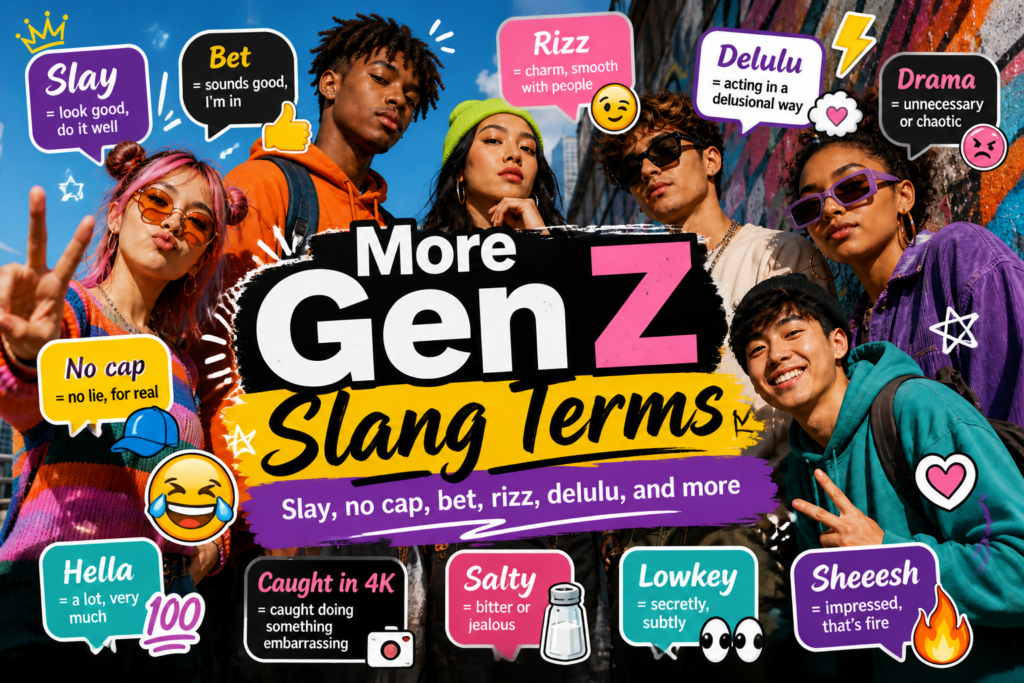
Gen Z slang moves fast, but once you learn the basics, it becomes easy to follow conversations online, in school, and on social media. This guide breaks down the 10 most common terms in a simple way, with meanings and examples you can actually use.
Why Gen Z Slang Matters
Language changes with every generation, and Gen Z has built a style that is short, expressive, and perfect for fast digital communication. These words are everywhere in comments, captions, texts, and videos, so knowing them helps you understand what people really mean. A quick slang guide can also make content feel more relatable and current.
1. Slay
Meaning: To do something extremely well, look amazing, or completely impress people.
Example: “You slayed that presentation.”
Another example: “Her outfit slays every time.”
2. No Cap
Meaning: No lie, for real, or being completely honest.
Example: “That movie was actually good, no cap.”
Another example: “No cap, this is the best burger I’ve had.”
3. Bet
Meaning: Okay, agreed, or I’m down.
Example: “You want to meet at 6?” “Bet.”
Another example: “Bet, I’ll send the file right now.”
4. Rizz
Meaning: Charm, smooth flirting skills, or the ability to impress someone easily.
Example: “He has so much rizz.”
Another example: “Her rizz is unreal.”
5. Delulu
Meaning: Short for delusional, often used playfully when someone is imagining something unrealistic but harmless.
Example: “I’m being delulu and thinking my crush noticed me.”
Another example: “She’s a little delulu about that celebrity friendship.”
6. Ate
Meaning: Did something so well that it was flawless or outstanding.
Example: “She ate that performance.”
Another example: “You ate with that outfit.”
7. Caught in 4K
Meaning: Caught red-handed, with clear proof.
Example: “You said you didn’t eat the cake, but you were caught in 4K.”
Another example: “The video caught him in 4K.”
8. Extra
Meaning: Over-the-top, dramatic, or doing the most.
Example: “She was being extra at the party.”
Another example: “He brought balloons, confetti, and a costume. So extra.”
9. Salty
Meaning: Bitter, annoyed, upset, or slightly offended.
Example: “He’s still salty about losing the game.”
Another example: “Don’t be salty just because they won.”
10. Lowkey
Meaning: Secretly, a little bit, or not too strongly.
Example: “I lowkey want pizza again.”
Another example: “I’m lowkey excited for the weekend.”
Quick Way to Remember Them
If you want to remember these terms faster, group them by feeling or use:
- Praise words: slay, ate, rizz.
- Agreement words: bet, no cap.
- Mood words: salty, extra, lowkey, delulu.
- Catchphrase words: caught in 4K.
How to Use Gen Z Slang Naturally
The best way to learn slang is to see it in real conversations and use it sparingly. Start with one or two words that fit your style instead of forcing all of them at once. That way, your speech feels natural instead of copied.
Read more: 15 Fresh Gen Z Slang Terms to Know in 2026
Final Thought
Gen Z slang is more than just internet words — it’s a fast, creative way to express personality, humor, confidence, and emotion. Once you understand these 10 terms, you’ll be able to follow conversations more easily and use the language with confidence. The key is to keep it simple, stay natural, and have fun with it.
Read more: 12 Gen Z Slang Terms You’ll Actually Want to Use in Real Conversations
- Gen Z vs Gen Alpha: 12 Key Differences Explained
- Who Is Gen Z? Characteristics, Mindset, Behaviour & Expectations (2026 Guide)
- 16 Gen Z Slang Words You Haven’t Heard Yet: Meanings, Examples & Context (2026)
- 10 Gen Z Phrases Every Parent Should Know in 2026 (With Examples)
- Gen Z Happiness: 7 Signs Your Child Is Thriving (Not Just Surviving)
પિંગબેક: 12 Gen Z Slang Terms You’ll Actually Want to Use in Real Conversations